Dungeon Delver Pro: A Desi Twist to Dungeon Crawling Excellence ⚔️
In the ever-growing landscape of Indian indie gaming, few titles have managed to strike a chord with both desi gamers and international audiences quite like Dungeon Delver Pro. Developed by Bangalore-based studio Desi Game Labs, this action-packed dungeon crawler isn’t just another addition to the genre—it’s a love letter to Indian mythology, history, and gaming culture, wrapped in engaging gameplay that keeps players hooked for hours on end. Chalo yaar, let’s dive deep into what makes this game so special!
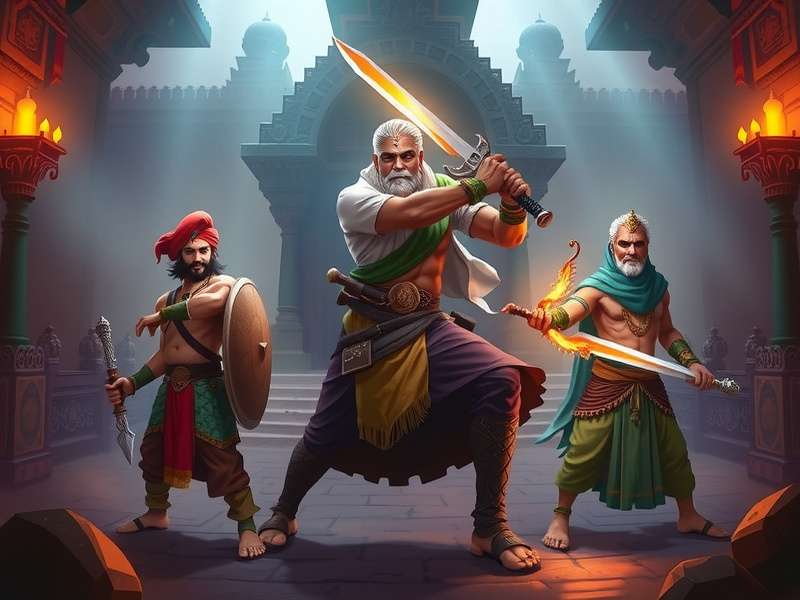
Launched on India’s Independence Day (15th August 2022) as a tribute to national pride, Dungeon Delver Pro arrived at a time when Indian gamers were craving content that felt relatable—something that didn’t just copy Western formulas but added a distinct desi touch. And boy, did it deliver! From the moment you fire up the game, you’re greeted with visuals of iconic Indian landscapes reimagined as fantasy dungeons, soundtracks featuring sitar and tabla, and characters that feel like they’ve stepped straight out of our epics and history books. It’s not just a game, bhai log—it’s an experience that celebrates everything we love about India, wrapped in a thrilling adventure.
What sets Dungeon Delver Pro apart from other dungeon crawlers is its unwavering commitment to authenticity. The team at Desi Game Labs spent three years researching Indian mythology, visiting historical sites across the country, and consulting with scholars to ensure that every aspect of the game—from the spells to the boss designs—stays true to our cultural roots. No lazy stereotypes here; this is a game made by Indians, for Indians, but with enough universal appeal to charm gamers worldwide. Whether you’re a fan of fast-paced action, deep lore, or just want to see your favorite mythological characters in a new light, this game has something for everyone.
Gameplay Mechanics: Desi Action with a Jugaad Touch 🎮
If there’s one thing Dungeon Delver Pro nails, it’s gameplay that’s both familiar to genre fans and fresh with desi innovations. The core loop is classic dungeon crawling—explore, fight, loot, upgrade—but every element has been tweaked to reflect Indian sensibilities. Let’s break down the key mechanics that make this game stand out from the crowd.
Playable Classes: Heroes Inspired by Indian History & Epics
Unlike most dungeon crawlers that rely on generic warrior-mage-rogue tropes, Dungeon Delver Pro offers four unique classes, each rooted in Indian history, culture, and mythology. Each class has its own playstyle, abilities, and backstory, allowing players to choose a hero that aligns with their gaming preferences. Let’s take a closer look:
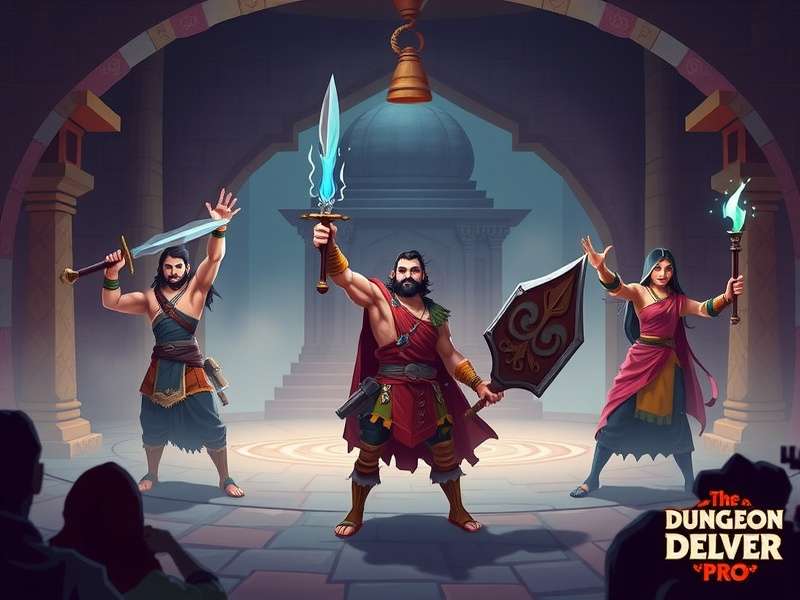
Rajput Warrior ⚔️
The tank of the group, inspired by the fearless Rajput warriors of Rajasthan. Clad in heavy armor adorned with traditional motifs, the Rajput Warrior excels in close combat, wielding weapons like the khanda (sword) and dhal (shield). His abilities include “Haldighati Strike” (a powerful area attack named after the famous battle) and “Rajput Valor” (a defensive buff that increases resistance to damage). Perfect for players who love charging into battle and protecting their team—jaisa ki Rajputon ne hamesha kiya hai!
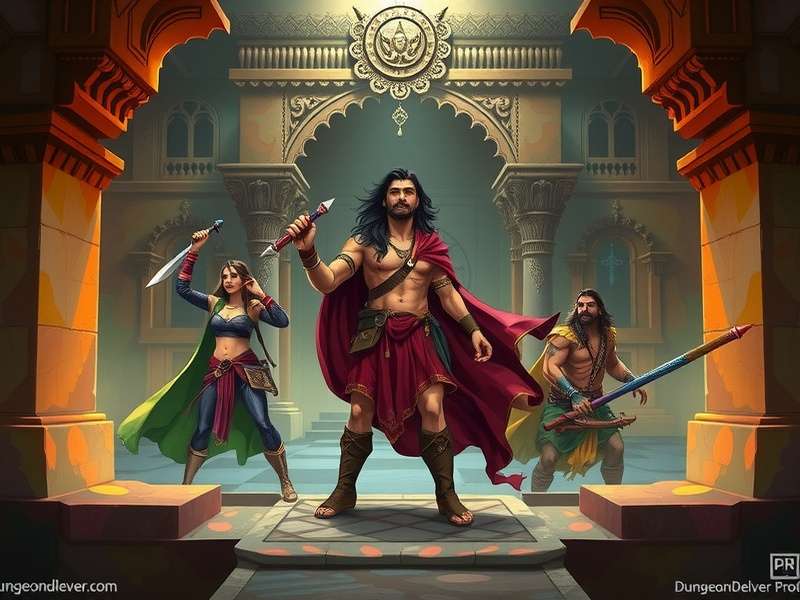
Brahmin Mage 🧙♂️
The spellcaster, drawing power from Vedic mantras and ancient wisdom. The Brahmin Mage uses a rudraksha mala as a weapon, channeling elemental magic (fire, water, air, earth) and divine energy to defeat enemies. His signature abilities include “Agni Mantra” (a fiery blast that burns multiple foes) and “Pranaya Heal” (a healing spell that restores health to the team using life energy). What’s cool is that the mantras are recited in actual Sanskrit by voice actors, adding a layer of authenticity that’ll give you goosebumps. Ideal for players who prefer to attack from a distance and support their team.
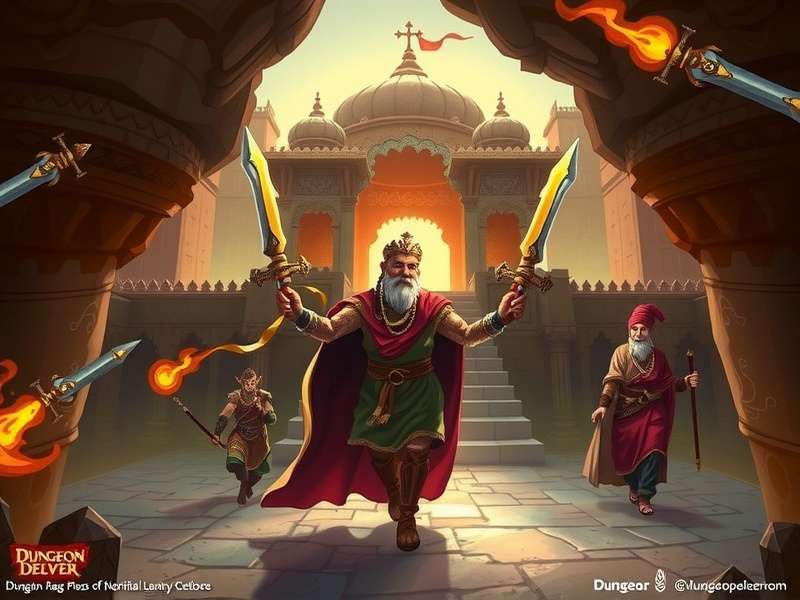
Vaishya Rogue 🕵️♂️
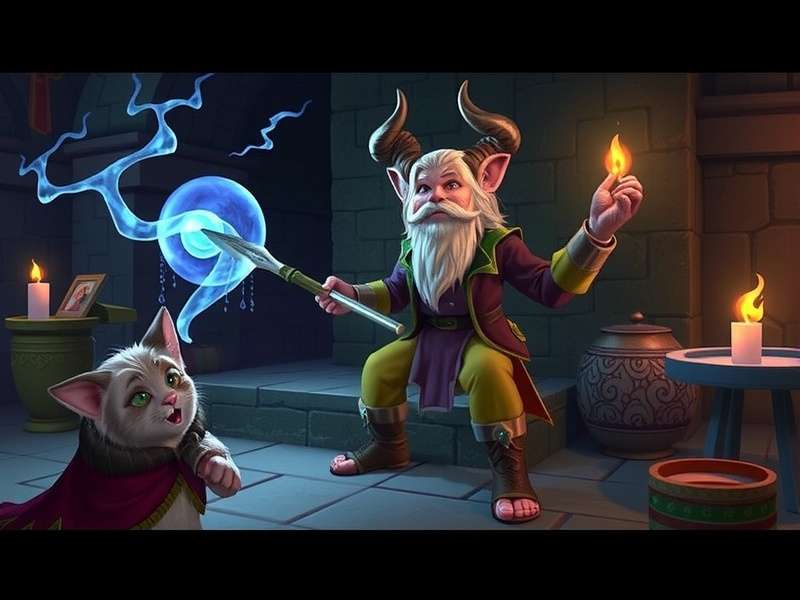
The stealth specialist, inspired by the Vaishya community’s reputation for cleverness and adaptability. The Vaishya Rogue uses a bow and arrow (with poison-tipped arrows) and a dagger for close-quarters stealth kills. His abilities include “Chor Ki Chaal” (invisibility for a short duration) and “Vish Arrow” (arrows that poison enemies over time). He’s also great at lockpicking and finding hidden loot—something that comes in handy in the game’s many secret chambers. Perfect for players who love sneaking around, taking out enemies silently, and collecting all the treasure (kya baat hai, dhan ki talash mein!
Shudra Healer 🌿
The support class, based on the Shudra community’s connection to nature and traditional medicine. The Shudra Healer uses herbal remedies and nature magic to heal allies and debuff enemies. Her abilities include “Tulsi Kavach” (a shield made from holy basil that protects allies) and “Neem Extract” (a debuff that weakens enemies’ attacks). She can also craft potions using ingredients found in dungeons, making her an essential member of any team. Great for players who enjoy supporting their friends and keeping the team alive through tough battles.
Core Gameplay Loop: Explore, Fight, Loot, Upgrade
The gameplay loop in Dungeon Delver Pro is simple but addictive. You start by choosing a class and selecting a dungeon to explore—each dungeon is based on a real Indian location, from the Amer Fort in Rajasthan to the Meenakshi Temple in Tamil Nadu. As you navigate the dungeon, you’ll encounter enemies like Rakshasas (demons), Nagas (snake creatures), and Yakshas (nature spirits), each with unique attack patterns and weaknesses.
Combat is fast-paced and satisfying, with responsive controls that work well on both mobile and PC. On mobile, you use on-screen joysticks and buttons to move, attack, and cast spells, while PC/console players can use a controller or keyboard and mouse. The game’s combat system rewards strategy—you can’t just button-mash your way through; you need to use your class’s abilities wisely and work with your team (if playing co-op) to take down tough enemies.
Looting is a big part of the game, and Dungeon Delver Pro doesn’t disappoint in this department. Every enemy you defeat and every chest you open has a chance to drop loot like weapons, armor, amulets, and crafting materials. The loot system has a distinct desi flavor—you’ll find items like “Kohinoor Shard” (a powerful amulet that increases attack power), “Pashupatastra Amulet” (grants immunity to poison), and “Taj Mahal Coin” (used to purchase upgrades). The best part? You can customize your character’s loadout to suit your playstyle—whether you want to focus on attack, defense, or support.
Upgrading your character is straightforward but rewarding. You earn experience points (XP) by defeating enemies and completing quests, which you can use to level up your character and unlock new abilities. You can also craft and upgrade weapons/armor using materials found in dungeons or purchased from merchants. The crafting system has a “jugaad” twist—you can combine seemingly unrelated items to create powerful gear. For example, combining a iron ore with a tulsi leaf gives you a “Tulsi-Iron Dagger” that deals extra damage to demonic enemies. It’s a fun nod to the Indian spirit of making do with what you have!
Multiplayer Modes: Play with Bhai Log! 🤝
While Dungeon Delver Pro is fun to play solo, it truly shines in multiplayer mode. The game offers two main multiplayer options: Co-op and PvP.
Co-op Mode: Up to 4 players can team up to explore dungeons together. This is perfect for playing with friends or joining random players online. Each player chooses a different class, and you need to work together to defeat enemies and solve puzzles. For example, the Rajput Warrior can tank damage while the Brahmin Mage casts spells, the Vaishya Rogue picks locks, and the Shudra Healer keeps everyone alive. The co-op mode is incredibly social—you can chat with your teammates using in-game voice chat (available in Hindi and English) and strategize together. It’s a great way to bond with friends, especially if you’re stuck at home and want to have some masti!
PvP Mode: For players who love competition, the PvP mode lets you battle against other players in 2v2 or 4v4 matches. The maps are smaller versions of the game’s dungeons, with unique objectives like capturing a flag or defeating a boss before the enemy team. PvP matches are fast and intense, requiring quick reflexes and teamwork. The game also hosts monthly PvP tournaments called “Dungeon Delver Championship” with prize pools of up to ₹5 lakh—something that’s helped build a strong competitive community around the game.
Puzzle & Exploration Elements
Unlike some dungeon crawlers that focus solely on combat, Dungeon Delver Pro places a strong emphasis on exploration and puzzles. Each dungeon is filled with secret chambers, hidden paths, and puzzles that require you to use your class’s abilities and knowledge of Indian mythology to solve.
For example, one puzzle in the Meenakshi Temple Dungeon requires you to arrange statues of Hindu gods in the correct order based on their position in the Trimurti (Brahma, Vishnu, Shiva). Another puzzle in the Himalayan Ice Caves involves using the Brahmin Mage’s fire spells to melt ice blocks and reveal a hidden path. The puzzles are challenging but not frustrating—they’re designed to make you think, and solving them rewards you with rare loot and lore entries that expand the game’s story.
Exploration is also encouraged—each dungeon has multiple paths, and taking the road less traveled often leads to hidden chests and secret bosses. The game’s level design is intricate, with attention to detail that makes each dungeon feel unique. From the sandstone walls of the Amer Fort Dungeon to the lush greenery of the Kerala Backwater Crypts, every location has its own distinct look and feel, making exploration a joy.
Plot & Narrative: A Journey Through Indian Mythology 📜
At its core, Dungeon Delver Pro is a story about courage, friendship, and the battle between good and evil—themes that are deeply ingrained in Indian epics like the Ramayana and Mahabharata. The game’s narrative is well-written, with engaging characters and plot twists that keep you invested from start to finish.
The Setting: Bharatvarsha Reborn
The game is set in “Bharatvarsha Reborn,” a fictional version of India where ancient mythology and modern elements coexist. Thousands of years ago, the gods and demons fought a great war known as the “Mahayudh,” which ended with the gods sealing the demon king, Rakshasraj, in a hidden temple deep within the Himalayas. To ensure Rakshasraj never escaped, the gods scattered three powerful artifacts—the “Amrit Shard,” the “Pashupatastra,” and the “Chintamani Gem”—across Bharatvarsha, each guarded by mythical creatures and ancient traps.
In the present day, a group of greedy treasure hunters accidentally breaks the seal on Rakshasraj’s prison, releasing him and his army of Rakshasas into the world. Rakshasraj’s goal is to find the three artifacts, combine their power, and conquer Bharatvarsha (and eventually the world). It’s up to you—the protagonist—and your team of allies to find the artifacts first, stop Rakshasraj, and save the world.
The setting is richly detailed, with each region of Bharatvarsha Reborn reflecting the culture and geography of real India. From the arid deserts of Rajasthan to the lush backwaters of Kerala, each location has its own unique environment, enemies, and lore. The game’s world feels alive—you’ll encounter NPCs (non-playable characters) from different regions, each with their own stories and quests that add depth to the narrative.
The Protagonist & Allies
You play as a young adventurer from a small village in Rajasthan (you can customize your character’s name, gender, and appearance). Your journey begins when Rakshasas attack your village, killing your family and destroying your home. Determined to avenge your loved ones and stop Rakshasraj, you set out on a quest to find the three artifacts.
Along the way, you meet three allies who join your team, each with their own reasons for fighting Rakshasraj:
- Arjun: A Rajput Warrior from Udaipur. Arjun’s father was a guardian of the Amrit Shard, but he was killed by Rakshasas. Arjun is loyal, brave, and a skilled fighter—he’s the muscle of the team and often acts as the leader.
- Sita: A Brahmin Mage from Varanasi. Sita is a scholar who has spent years studying Vedic texts and mythology. She believes that Rakshasraj’s return is a sign of imbalance in the world, and she’s determined to restore harmony. She’s the brains of the team, providing valuable information about enemies and puzzles.
- Ravi: A Vaishya Rogue from Mumbai. Ravi was a thief who stole from the rich to feed the poor, but he was caught and imprisoned. When Rakshasas attacked the prison, he escaped and joined your team. Ravi is witty, clever, and always on the lookout for treasure—he’s the team’s scout and lockpicker.
The dynamic between the four characters is one of the game’s strongest points. They banter with each other in Hindi and English, sharing jokes and personal stories that make them feel like real people. For example, Arjun often teases Ravi about his thieving ways, while Sita lectures the group about mythology. The voice acting is top-notch, with Indian voice actors bringing the characters to life with authentic accents and emotions.
The Story Arc
The game’s story is divided into three acts, each focusing on finding one of the artifacts:
Act 1: The Amrit Shard (Rajasthan)
Your journey begins in Rajasthan, where the Amrit Shard is hidden in the Amer Fort Dungeon. You travel from your village to Udaipur, where you meet Arjun. Together, you explore the Amer Fort Dungeon, battling Rakshasas and solving puzzles based on Rajput history. Along the way, you learn about Arjun’s past and his connection to the Amrit Shard. The act ends with a boss fight against “Kaal Rakshasa,” a powerful demon who guards the Amrit Shard. After defeating Kaal Rakshasa, you retrieve the Amrit Shard and set out for Varanasi to find the next artifact.
Act 2: The Pashupatastra (Varanasi & Tamil Nadu)
In Varanasi, you meet Sita, who tells you that the Pashupatastra is hidden in the Meenakshi Temple Catacombs in Tamil Nadu. The three of you travel south, facing new enemies like Nagas and Yakshas. Along the way, you learn about Sita’s research and her belief in the importance of balance. The Meenakshi Temple Catacombs are filled with puzzles based on Hindu mythology, requiring you to use Sita’s knowledge to progress. The act ends with a boss fight against “Naga Queen,” who guards the Pashupatastra. After defeating her, you retrieve the artifact and head to Mumbai to find the final piece.
Act 3: The Chintamani Gem (Mumbai & Himalayas)
In Mumbai, you meet Ravi, who helps you infiltrate the Backwater Crypts (a hidden dungeon beneath the city) to find the Chintamani Gem. The crypts are filled with traps and enemies like “Shadow Rakshasas,” who can turn invisible. Along the way, Ravi shares his story of being a thief and his desire to make amends. After retrieving the Chintamani Gem, you travel to the Himalayas to face Rakshasraj in the final showdown. The final boss fight is epic—Rakshasraj has three phases, each with unique attacks and mechanics. With the help of your allies and the three artifacts, you defeat Rakshasraj and seal him away once again. The game ends with you and your allies returning to their villages, hailed as heroes.
The story has several side quests that expand the lore and give you a chance to learn more about the game’s world and characters. For example, one side quest has you helping a village in Kerala defend against a group of Yakshas, while another has you retrieving a stolen relic for a temple in Varanasi. These side quests are optional but highly recommended—they add hours of gameplay and make the world feel more immersive.
Development Journey: From IIT Dreams to Desi Gaming Sensation 🚀
The story of Dungeon Delver Pro begins in 2018, when three engineering graduates from IIT Delhi—Rahul Sharma, Priya Patel, and Vikram Singh—decided to follow their passion for gaming. All three were avid gamers who loved dungeon crawlers like Diablo and Path of Exile, but they often felt that these games lacked something relatable to Indian audiences. “We’d play these great games, but we’d always think—what if there was a game that featured our mythology, our history, our culture?” says Rahul Sharma, the game’s lead designer. And so, Desi Game Labs was born.
The Early Days: Crowdfunding & Research
Starting a game development studio in India isn’t easy—funding is scarce, and the industry is dominated by mobile games with simple mechanics. But the trio was determined to create something different. They quit their jobs, pooled their savings, and set up a small office in Bangalore (a city known for its tech and startup culture). The first challenge was funding—they needed money to hire artists, programmers, and voice actors. Instead of approaching big investors (who were skeptical about an Indian-themed dungeon crawler), they turned to crowdfunding.
They launched a campaign on Milaap (a popular Indian crowdfunding platform) with a goal of ₹5 lakh. The campaign featured a demo of the game, concept art, and a video explaining their vision. To their surprise, the campaign exceeded its goal within a month, raising over ₹8 lakh from over 1,000 backers. “It was overwhelming,” says Priya Patel, the game’s producer. “We realized that there were so many Indian gamers who wanted a game like this—something that celebrated our culture. That gave us the confidence to keep going.”
With funding secured, the team turned to research—a crucial part of creating an authentic Indian-themed game. Over the course of a year, they traveled across India, visiting historical sites like the Amer Fort, Meenakshi Temple, and Khajuraho Temples. They also consulted with scholars of Indian mythology and history to ensure that every aspect of the game—from the character designs to the spell names—was accurate. “We didn’t want to just throw in random Indian elements for the sake of it,” says Vikram Singh, the game’s lead programmer. “We wanted to make sure that everything felt authentic and respectful to our culture.”
The team also spent a lot of time studying Indian gaming culture. They conducted surveys with over 5,000 Indian gamers to understand what they wanted from a dungeon crawler. The results were clear: gamers wanted engaging gameplay, authentic Indian themes, and mobile compatibility (since mobile gaming is the dominant platform in India). Armed with this information, the team set out to develop the game.
Development Challenges & Solutions
Developing Dungeon Delver Pro was full of challenges, but the team used their engineering backgrounds and the Indian spirit of jugaad to overcome them.
One of the biggest challenges was creating Indian-themed visuals that were both authentic and visually appealing. The team hired local Indian artists who specialized in traditional art forms like Madhubani and Warli. These artists helped create the game’s character designs, dungeon environments, and UI elements, ensuring that every visual had a distinct desi touch. For example, the Rajput Warrior’s armor features Madhubani patterns, while the Meenakshi Temple Dungeon has Warli paintings on the walls. “Working with these artists was a dream,” says Rahul. “They brought a level of authenticity that we couldn’t have achieved otherwise.”
Another challenge was optimizing the game for mobile devices. Since most Indian gamers play on mid-range smartphones, the team needed to ensure that the game ran smoothly on devices with limited processing power. They used Unity engine’s mobile optimization tools, reduced the size of textures and models, and optimized the game’s code to run efficiently. The result? A game that looks stunning but doesn’t drain your battery or lag on mid-range phones.
Voice acting was another challenge. The team wanted to use Indian voice actors to give the characters authentic accents and emotions. They held auditions in Mumbai and Delhi, hiring actors who could speak both Hindi and English fluently. The voice actors spent hours researching their characters’ backstories to ensure that their performances were genuine. “The voice acting is one of the things players love most about the game,” says Priya. “It makes the characters feel like real people, not just avatars.”
The Launch: Independence Day Tribute
After three years of hard work, Dungeon Delver Pro was ready for launch. The team decided to release the game on 15th August 2022—India’s Independence Day—as a tribute to national pride. “We wanted to launch the game on a day that’s meaningful to all Indians,” says Vikram. “It’s our way of celebrating our country and our culture.”
The launch was a huge success. The mobile version was downloaded over 1 million times within the first 24 hours, and it quickly rose to the top of the Google Play Store and App Store charts. Indian streamers like CarryMinati, AmitBhadana, and Techno Gamerz played the game on their channels, introducing it to millions of viewers. The game’s social media accounts (Facebook, Instagram, Twitter) gained over 500,000 followers in the first month, with players sharing screenshots, videos, and stories about their gameplay experiences.
The team was overwhelmed by the response. “We never expected this kind of success,” says Rahul. “We made this game for ourselves and for Indian gamers who wanted something relatable, but the love we’ve received is beyond our wildest dreams.”
Critical Reception & Gamer Feedback: A Desi Hit 🌟
Since its launch, Dungeon Delver Pro has received widespread acclaim from both critics and gamers. It’s not just a commercial success—it’s a critical darling, with many reviewers praising its authenticity, gameplay, and storytelling.
Critical Reviews
Indian gaming outlets were quick to praise the game. Desi Gamer Hub gave it a 4.5/5 rating, calling it “the best Indian-themed dungeon crawler ever made.” The review praised the game’s “authentic mythology, engaging gameplay, and stunning visuals,” adding that “it’s a game that every Indian gamer should play.”
Gaming Bharat gave the game a 9/10, saying that “Dungeon Delver Pro sets a new standard for Indian indie games. It’s clear that the team put their heart and soul into creating a game that celebrates Indian culture, and it shows in every aspect—from the character designs to the soundtrack.”
International outlets also took notice. IGN India gave the game an 8.7/10, noting that “while the game is clearly made for Indian audiences, its engaging gameplay and rich storytelling make it accessible to gamers worldwide. It’s a great example of how cultural specificity can lead to universal appeal.”
Critics also praised the game’s attention to detail. The Hindu called it “a love letter to Indian mythology,” noting that “the game’s puzzles, boss designs, and lore are all deeply rooted in our epics and history, making it a educational experience as well as an entertaining one.”
Of course, no game is perfect, and Dungeon Delver Pro has its share of criticisms. Some reviewers noted that the mobile version had occasional bugs (which were quickly fixed with updates), while others felt that the story pacing was slow in the middle chapters. But these criticisms were minor compared to the overall praise.
Gamer Feedback
Gamers have been equally enthusiastic about the game. On the Google Play Store, the game has a 4.8/5 rating from over 500,000 reviews, with players praising its “authentic desi feel,” “engaging gameplay,” and “great multiplayer mode.”
Many players have shared their love for the game’s characters and story. One player wrote, “I love how the characters feel like real Indians—their banter, their accents, their backstories. It’s like playing a game with my friends!” Another player said, “The story is amazing—I cried when Arjun talked about his father. It’s not just a game; it’s an emotional journey.”
Players also appreciate the game’s accessibility. “As someone who plays on a mid-range phone, I’m impressed by how smooth the game runs,” wrote one reviewer. “It looks stunning, but it doesn’t lag or drain my battery. That’s a big win for Indian gamers!”
The game’s multiplayer mode has also been a hit. “Playing co-op with my bhai log is so much fun,” said one player. “We stay up late chatting and fighting Rakshasas—it’s the best way to bond!” The PvP tournaments have also gained a loyal following, with players competing for the prize pool and bragging rights.
Commercial Success
Commercially, Dungeon Delver Pro has been a massive success. The mobile version has crossed 10 million downloads worldwide, with over 70% of downloads coming from India. The premium mobile version (priced at ₹499) has sold over 500,000 copies, while the PC/console version (priced at ₹1,299 for the standard edition) has sold over 200,000 copies.
The game’s in-app purchases (which are cosmetic only—no pay-to-win elements) have also been popular. Players can buy skins for their characters (like a “Taj Mahal Rajput Warrior” skin or a “Varanasi Brahmin Mage” skin) and emotes (like a “Bhangra Dance” emote or a “Namaste” emote). The in-app purchases generate a steady stream of revenue for the team, allowing them to fund updates and expansions.
The game’s success has also put Desi Game Labs on the map. The studio has grown from 3 employees to 25, and they’ve received offers from international publishers to distribute the game in other countries. “We’re excited to bring Dungeon Delver Pro to gamers around the world,” says Priya. “But our focus will always be on Indian gamers—they’re the ones who supported us from the start.”
Community & Esports: Building a Desi Gaming Family 🤩
One of the biggest strengths of Dungeon Delver Pro is its vibrant community. Desi Game Labs has worked hard to build a community of players who share a love for the game and Indian culture. From Discord servers to Facebook groups, the game’s community is active, friendly, and supportive.
Community Platforms
The game’s official Discord server has over 2 million members, making it one of the largest Indian gaming Discord servers. The server is divided into channels for gameplay tips, fan art, cosplay, and general chat. The Desi Game Labs team is active on the server, interacting with players, answering questions, and taking feedback. “We read every message,” says Rahul. “Our players are our biggest critics and our biggest supporters. Their feedback helps us make the game better.”
The game also has a strong presence on Facebook (1.5 million followers) and Instagram (800,000 followers), where the team shares updates, fan art, and behind-the-scenes content. Players often share their own gameplay videos, cosplay photos, and fan fiction, which the team features on their social media accounts. “It’s amazing to see the creativity of our community,” says Priya. “We have players who create stunning cosplay of the characters, write fan fiction that expands the game’s lore, and even make their own fan art. It’s a testament to how much the game means to them.”
The game’s official forum is another popular platform for players to connect. The forum has sections for strategy guides, modding, and suggestions. The modding community is particularly active—players have created custom dungeons, characters, and weapons, which they share on the forum. Desi Game Labs even features the best mods on their website, encouraging players to get creative.
Esports & Tournaments
To capitalize on the game’s competitive spirit, Desi Game Labs launched the “Dungeon Delver Championship” (DDC) in 2023. The DDC is a monthly PvP tournament with a prize pool of up to ₹5 lakh. The tournament is open to all players, and it’s streamed live on YouTube and Twitch, with commentary in Hindi and English.
The first DDC had over 1 lakh participants, with the winner being a 19-year-old from Hyderabad named Ritesh Kumar. “Winning the DDC was a dream come true,” says Ritesh. “I’ve been playing the game since launch, and to compete against the best players in India and win is amazing. The prize money helped me buy a new PC, which I use to stream the game.”
The DDC has grown in popularity over time, with more participants and larger prize pools. In 2024, Desi Game Labs announced the “Dungeon Delver World Championship,” a global tournament with a prize pool of ₹50 lakh. The tournament will feature teams from India, the US, the UK, and other countries, putting Indian gamers on the global esports map.
The game’s esports scene has also attracted the attention of Indian esports organizations like Team India and Global Esports. Several organizations have signed professional Dungeon Delver Pro players, giving them salaries, training, and opportunities to compete in tournaments around the world. “It’s great to see Indian esports growing,” says Vikram. “We’re proud that our game is playing a part in that.”
Community Events & Initiatives
Desi Game Labs regularly hosts community events to engage with players. One of the most popular events is “Desi Game Night,” a monthly live stream where the team plays the game with fans, answers questions, and gives away prizes. The team also hosts cosplay contests, fan art contests, and story-writing contests, with winners receiving in-game rewards and merchandise.
The studio also gives back to the community through charitable initiatives. In 2023, they donated 10% of the game’s sales to charity, supporting education for underprivileged children in rural India. They also launched a “Gamers for Good” campaign, where players can donate in-game currency to charity, with Desi Game Labs matching every donation. “We believe that gaming can be a force for good,” says Priya. “We’re grateful for the support of our community, and we want to give back to those in need.”
Frequently Asked Questions (FAQs) ❓
Trivia & Fun Facts About Dungeon Delver Pro 🎉
- The Rajput Warrior’s “Haldighati Strike” ability is named after the Battle of Haldighati (1576), a famous battle fought between the Rajputs and the Mughals.
- The Brahmin Mage’s spells are based on actual Vedic mantras, with the voice actors reciting the mantras in Sanskrit. The team consulted with Sanskrit scholars to ensure the mantras were pronounced correctly.
- The game’s soundtrack was composed by Ravi Shankar, a protégé of A.R. Rahman. The soundtrack